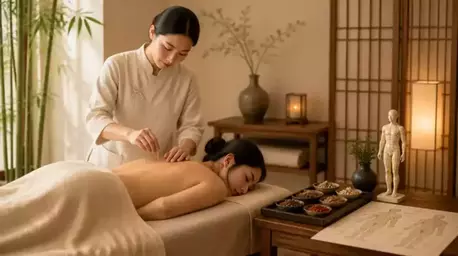
Holistic Approach
Emphasizes treating the whole person rather than just symptoms.
Subscribe to get the latest insights and updates straight to your inbox.
Posted on: 2026-03-08
By: Kaiya Whitmore
In a world where ancient practices meet cutting-edge science, how does acupuncture bridge the gap between tradition and modern healthcare? This article delves into the fascinating intersection of neuroscience and acupuncture, revealing insights that challenge misconceptions and promote understanding of this age-old practice.
Acupuncture intertwines traditional medicine with modern neuroscience, showcasing its holistic benefits.
Emphasizes treating the whole person rather than just symptoms.
Highlights the brain's ability to change and adapt through acupuncture.
Explores how acupuncture can lower stress hormones and promote relaxation.
Research shows acupuncture releases endorphins, aiding pain management.
Acupuncture is often seen as an ancient practice, but when you look deeper, you realize it has a modern twist as well. The intersection of traditional medicine and contemporary neuroscience reveals fascinating insights into how this practice works. For instance, have you ever thought about how the tiny needles can lead to significant changes in our body? Understanding this connection is key to appreciating the broader implications of acupuncture and Chinese medicine in health and wellness.
This blend of old and new emphasizes that acupuncture is not just about needles and meridians; it’s also about science and the brain! By exploring how acupuncture interacts with our neural pathways, we can enhance not only the perception of this ancient art but also its application in modern health practices. This exploration is central to what we do here at Acupuncture Perspectives, as we aim to bridge the gap between ancient wisdom and cutting-edge research.
At the heart of acupuncture lies the principle that our bodies are interconnected systems. Chinese medicine has long acknowledged the flow of Qi (Chi), but modern neuroscience offers a fresh perspective on how this energy interacts with our nervous system. In fact, studies show that acupuncture can influence brain activity, leading to both physical and emotional healing. Isn’t it amazing how these two worlds collide?
Furthermore, there are several key concepts that illustrate this intersection:
Understanding the neuroscience behind acupuncture not only enhances its credibility but also opens doors for broader acceptance in conventional medicine. As we delve into the neurobiological mechanisms, it becomes clear that acupuncture is more than a placebo; it is a legitimate form of treatment supported by science. For example, research has shown that acupuncture can lead to the release of endorphins—the body's natural painkillers! This scientific validation further strengthens the argument for acupuncture's scientific insights on effectiveness.
Moreover, these insights can improve how we approach acupuncture in clinical settings. Here are some reasons why neurobiological understanding is essential:
To maximize the benefits of acupuncture, consider keeping a health journal. Documenting your experiences, symptoms, and how you feel before and after each session can provide valuable insights for both you and your practitioner. This practice can help tailor your treatment plan more effectively and allow you to notice subtle changes in your health over time.
Acupuncture has been used for thousands of years, and its relevance in modern healthcare continues to grow. Have you ever considered how certain health conditions respond to this ancient practice? By mapping specific ailments like chronic pain, anxiety, and inflammation to their corresponding neurobiological mechanisms, we can better understand acupuncture’s role in promoting health. This is where the fascinating interplay between traditional medicine and modern neuroscience truly shines!
For instance, chronic pain often involves complex neurobiological processes, including the activation of pain pathways and the release of inflammatory mediators. Acupuncture can help modulate these responses, potentially leading to significant relief. Similarly, anxiety may be linked to neurotransmitter imbalances, which acupuncture can also influence, creating a holistic approach to treatment.
Let's dive into the data! Numerous peer-reviewed studies have highlighted acupuncture's effectiveness in treating various conditions. For example, a comprehensive meta-analysis indicated that acupuncture significantly reduces chronic pain and improves quality of life. Isn’t it reassuring to know that science supports something as time-honored as acupuncture?
Some notable studies include:
These findings not only validate acupuncture's place in integrative health but also inspire patients and practitioners alike to embrace its benefits. By sharing these studies on our platform at Acupuncture Perspectives, we hope to bridge the gap between ancient wisdom and contemporary medical practice.
Despite its growing acceptance, acupuncture is often surrounded by misconceptions. One important aspect to address is its limitations and contraindications. Understanding when acupuncture may not be appropriate can help set realistic expectations for patients.
Acupuncture may not be effective or recommended in certain scenarios, such as:
Here are some common questions about how acupuncture intersects with modern neuroscience:
Have you ever noticed how your mindset can influence your health outcomes? It’s quite remarkable! Patient experiences often highlight the role of placebo and expectations in acupuncture outcomes. Studies suggest that the belief in the treatment’s efficacy can significantly affect its results. This is where understanding how acupuncture works on the brain becomes crucial!
Factors influencing patient experience include:
At Acupuncture Perspectives, we encourage open dialogue about these factors, helping patients to better understand their journeys and the holistic aspects of their treatments.
As I’ve explored in my practice, understanding the neurobiological findings can inform treatment protocols. This approach ensures that patients receive the best care possible, tailored to their individual needs. So, what are the best practices for acupuncture frequency and dosage?
Research has shown that optimal treatment protocols often include:
Every individual is unique, and so is their response to acupuncture! Factors like genetics, lifestyle, and personal health history can all contribute to how well someone responds to treatment. This variability is essential to consider when crafting personalized treatment plans. Understanding these nuances can provide insights on acupuncture benefits for each patient.
By recognizing these differences, practitioners can adjust their techniques, points of focus, and treatment frequency for optimal outcomes. This personalized approach is what I strive to offer at Acupuncture Perspectives, ensuring each patient feels valued and understood.
As we look to the future, the integration of neuroscience into acupuncture research opens up exciting possibilities! Continued exploration in this field can lead to innovative treatment protocols and a deeper understanding of how acupuncture operates within the body.
Some potential areas for future research may include:
At Acupuncture Perspectives, we believe that a focus on these areas will not only enhance our understanding of acupuncture but will also solidify its place in modern healthcare. The path forward is filled with promise, and I’m excited to be a part of it!
In conclusion, understanding the clinical applications and evidence-based outcomes of acupuncture reveals the profound impact it can have on health. By combining ancient wisdom with modern scientific inquiry, we can better appreciate acupuncture's role in holistic wellness. It’s a journey worth taking, and I invite you to explore the possibilities!
Here is a quick recap of the important points discussed in the article: